Josiah Brown has a Bachelor of Arts in History and Communication from the University of Auckland and works in communications. Once upon a time he was a lad in the LRBC youth group while Chris was the youth pastor. Josiah is about to begin as the Communications Coordinator at Maxim Institute.
Guy Ritchie’s The Covenant (2023) transcends typical war film tropes of bullet-riddled action, frenetic cuts and shaky camera movements. It has bullets, yes. And no shortage of gripping combat, but at the film’s heart is the pledge of two men that points to an eternal reality.
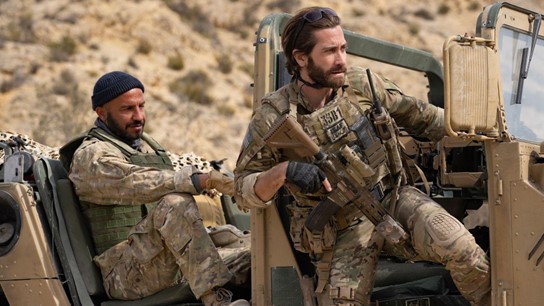
The plot follows US Army Sergeant John Kinley (Jake Gyllenhaal) and Afghani interpreter Ahmed (Dar Salim), who belong to a special unit tasked with finding Taliban munitions and explosive sites. What follows is a struggle against hope.
The unlikely relationship begins with the wry standoffishness one might expect from the mutual appraisal of two men yet to test the other’s mettle.
In their first exchange at a US air base, Sergeant Kinley asks Ahmed about his mechanical expertise. Ahmed explains that he’s good with anything that has an engine.
“Oh, yeah? Well, what’s this?” asks Kinley sarcastically, motioning to the hood of the Humvee where he sits. With a pause, a lingering glance at the vehicle and a side-eye, Ahmed informs the Sergeant that it is “an engine” before tacking on “sir”.
Sergeant John Kinley: “Are you patronising me, Ahmed?”
Ahmed: “No. No. I would never patronise an officer, sir.”
Having passed the test, Kinley nods approval almost imperceptibly and introduces Ahmed to the rest of the team.
Ahmed rubs against the chain of command as a nail not hammered flush catches against things. A pattern of insubordination and second-guessing orders emerges, but Ahmed is not motivated by pride; instead, his intuition and contextual understanding override his duty to obey.
Sergeant Kinley leaves this irksome nail in place and learns to trust Ahmed despite his lack of decorum, realising the team’s fate hangs on his insight. As his reward Sergeant Kinley reaps valuable intel and the safety of his men. Yet, Sergeant Kinley quickly becomes more reliant on Ahmed’s character than his knowledge when an operation goes sideways.
A harrowing escape behind enemy lines ensues as Ahmed carries an incapacitated Sergeant Kinley dozens of miles across the desert to deliver him from death. With this life-debt incurred, Sergeant Kinley returns to Afghanistan after learning Ahmed had become a Taliban target, and the US visa promised to him and his family failed to materialise.
Both protagonists obligate themselves to the other at great personal risk, forming an unspoken covenant which is the basis of the film’s title.
Stunning cinematography, smooth camera movements (occasionally interrupted by handheld shots), and muted tones capture the audience in the film’s setting. At the same time, the score is artfully employed to build and relieve tension, being careful not to lose the story in the fog of war.
The space afforded to the audience through these techniques allows for measured thematic consideration. It gives this film its weightiness as the test of character is elevated above and presented in the context of physical tribulation. Important as this is to compelling filmmaking, triumph over adversity merely plays a supporting role in making this film great.
“A Glimpse of Greater Faithfulness”
What makes this film impactful is the pledge between Sergeant Kinley and Ahmed, because it reflects (albeit imperfectly) the essential goodness of God’s covenant with Man.
The performances of Jake Gyllenhaal and Dar Salim augment their characters’ selfless displays of tender love and compassion that are foundational to the film’s emotional and moral appeal.
Ahmed risked his life when Sergeant Kinley was completely helpless to save himself from death; Sergeant Kinley left the comfort of home and family (for a place that did not know him) to save Ahmed from enclosing enemies.
Viewers intuitively recognise the inherent beauty and truth of these right actions. For “Greater love has no one than this: to lay down one’s life for one’s friends” (John 15:13).
Just as the Law given through Moses has a shadow of the good things to come (Hebrews 10:1), so too The Covenant points to God’s covenant with Israel through which they and the nations are blessed (E.g. Genesis 12:1–3; Isaiah 42:6).
Although man’s motives are impure, God’s are pure. Where man is fallible, God is infallible. God’s covenant will not be revoked, nor is he too weak to achieve what he has promised:
God is not human, that he should lie,
not a human being, that he should change his mind.
Does he speak and then not act?
Does he promise and not fulfill? (Numbers 23:19)
God did not ‘risk’ Himself for the good of His people; He gave His life for his people to save them from death. Jesus the Messiah left His glory above by taking on the form of a slave, becoming the likeness of men and coming to a people that were His own who did not receive Him (Philippians 2:7; John 1:10-11, 17:5).
As we consider the covenantal faithfulness of fallible and weak men like Sergeant Kinley and Ahmed, let us remember and praise the unfailing faithfulness of the Holy One of Israel, who is our rest and certain hope.
He is the faithful God who keeps his covenant for a thousand generations and lavishes his unfailing love on those who love him and obey his commands. (Deuteronomy 7:9)

 Chris Northcott