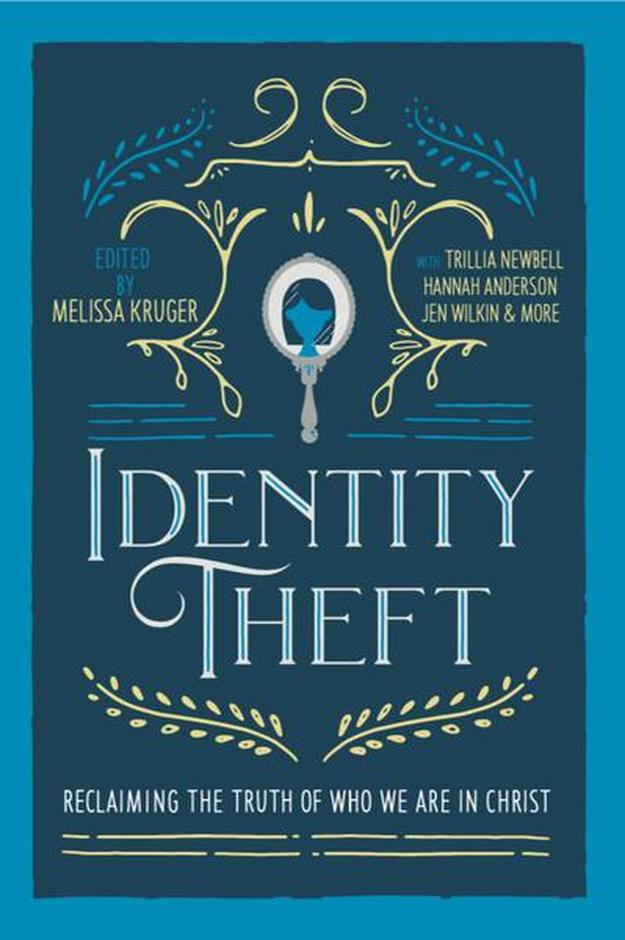
Edited by Melissa Kruger. The Gospel Coalition, 2018. 137 pages.
The question of identity is likely the most fraught and uncertain aspect of life in the present day. All of us are familiar with the way that gender, race, relationships, politics, religion, employment, and sexuality disrupt society and politics. Many people find and decide their personal identities in these categories, and determine their friends and their opponents by them.
For Christians, our most important identity is found in the fact that we belong to Christ. Identity Theft: Reclaiming the Truth of Who We are in Christ reminds readers of the different facets of this identity and their implications for everyday living.
This brief book is made up of ten short chapters and is angled toward female audiences. Each chapter is written by a woman[1] with clear theological and pastoral insight into what it means to find our primary identity in Christ. Every contribution includes several components.
After introducing the subject with some personal anecdote, each chapter describes how our identity in Christ can be replaced or misconstrued, how it should be understood biblically, and how life is transformed by it. Each chapter also includes a key verse to memorise and a series of questions that can be used for reflection or group discussion.
The ten chapters are as follows:
Free: Rescued by Grace. This chapter reminds Christians of the freedom we have in Christ in our past, present, and future. We have been justified and so are free from sin’s penalty, we are being sanctified and so free from sin’s power, and we will be glorified, at which time we will be freed from sin’s presence. We are also warned against ideas which abuse or misunderstand our freedom which we should avoid: license, legalism, and escapism.
Reflection: Made in God’s Image. Christians are called to ground our identity in the fact that we are as humans made to reflect God. Rather than finding our purpose and self-worth in our careers, families, ethnicity, or anything else, we must look to our in-built nature as image-bearers of God.
Child: Beloved by the Father. Christians are sons and daughters of God not because we were created by him, but because we have been redeemed by his Son and adopted. Grasping the significance of this reality will ensure we rest securely in the love of God rather than being tempted to despair that we haven’t done enough to deserve it or might be unwanted.
Saint: Redeemed by the Son. This chapter reminds us that ‘saints’ are not exceptional dead Christians, but all living Christians. Saints are all of God’s people, named “holy ones” (the meaning of ‘saints’) because they have been set apart for God by the redeeming work of Christ. Our sin doesn’t nullify our status as God’s holy people, although it does cause tension with our identity as saints which affects our daily life in several ways that the author describes.
Fruitful: Filled with the Holy Spirit. This chapter emphasizes that we become truly productive for God not by our striving in the manner of our productivity-driven culture. Rather, we must learn to rest or ‘abide’ in Christ in the manner of Jesus’ words in John 15 (the vine and the branches) so that we can bear fruit for God.
Member: Connected to the Church. Here readers are reminded that “The church is fundamental to the identity of everyone who belongs to Christ.” The author does this by demonstrating the way that both the Old and New Testaments expect that faith presumes community. This chapter also points out some ways that our identity as members of a church is “stolen,” and some practical ways we can enact our identity as members of Jesus’ church.
Beautiful: Clothed in Splendor. This chapter focuses on the (in)significance of physical beauty, in a way that is generally more applicable to women than it is to men. The author examines the ways that preoccupation with physical appearance leads to sinful attitudes, and reaffirms the kind of beauty that God desires to see in his people and encourages readers to be comfortable in that beauty.
Servant: Reaping a Reward. Serving others can be a thankless task. This chapter reaffirms the goodness and Christlikeness of working for the sake of others even when we find it hard or taken for granted, and reminds us of how we are motivated in this direction.
Worshipper: Shining Brightly in the Darkness. This chapter recounts the way that we today are wrongly inclined toward making ourselves objects of admiration. Instead, Christians are to be “proclamation people” whose love and awe of God leads us to be people who are driven to express worship by words, actions, and by bringing the news about Jesus to the world around us.
Citizen: Longing for Home. The final chapter considers the different evocations we can experience for the feeling of “home.” Wherever we might search for and find a sense of homeliness in this life, the home Christians should yearn for is with God. Living in this orientation helps us to rightly order our lives in the here and now, and sustains us when we struggle or suffer.
This is a terrific short book for people wanting a deeper understanding of what it means to be a Christian in a way that is both theological and practical. Pastoral teachers will also find it a useful guidebook for a teaching or discipling series. Although the intended audience is female, male readers will find this useful as well even if they don’t connect with the anecdotes and illustrations, since our identity in Christ is not altered by gender (even if the outworkings might be, to a degree).
Conversion to Christ is a life-changing event, but misunderstanding the implications of who we are in Christ can hinder or even harm our development in our new identity. This is a helpful book for grasping the reality and implications of what it means to be a Christian.
Identity Theft can be read online for as a PDF from The Gospel Coalition, or purchased from book retailers such as Koorong or Amazon.
[1] The authors are as follows, and hyperlinked for more information: Melissa Kruger, Jen Wilkin, Hannah Anderson, Courtney Doctor, Jasmine Holmes, Megan Hill, Trillia Newbell, Betsy Childs Howard, and Lindsey Carlson.

 Chris Northcott