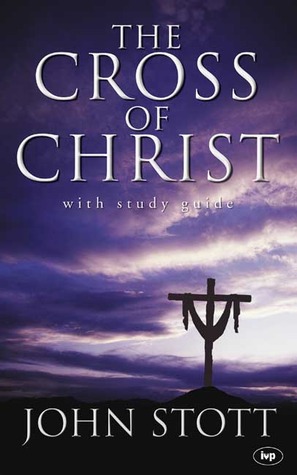
John Stott. IVP, 1986. 383 pages.
The cross is the most distinctive symbol of Christian faith, pointing to what for Christians is the most momentous moment in all history: the crucifixion of Jesus the Christ, the Son of God. John Stott’s[1] The Cross of Christ seeks to display and explain the full significance of this moment. First published in 1986 it has gone through numerous reprintings, showing the enduring popularity of what is arguably Stott’s greatest work.
The Cross of Christ explores and examines a range of topics surrounding the cross, focussing not only on the nature of the atonement but the wider passions narratives, its significance for Christian living, and its impact on history. Within the discussion on these subjects Stott engages with the scholarship and ideas of historical and contemporary thought (of the 1980s) from Christian theological history as well as secular thinkers. He also offers a treasure trove of expositions of biblical passages and themes throughout these chapters.
What follows is a summary of content of each chapter of The Cross of Christ.
Part One: Approaching the Cross
1. The Centrality of the Cross. Stott’s book begins by presenting the central place that the cross has had as the primary symbol of the Christian faith. Despite the use of other symbols, and other key moments in the life of Christ, it was his death by crucifixion that came to hold pride of place. And this is rightly so—since it central to Jesus’ own understanding of his mission, and emphasised through the teaching of the Apostles.
2. Why did Christ die? This chapter examines the responsibility carried by different parties to the death of Jesus. In the Gospel narratives, we can see that the Roman soldiers and their governor Pilate who carried out the trial and execution, the Jewish crowds and their leaders who hated him and handed him over the Romans, and Jesus’ disciple Judas who betrayed him. But ultimately, this was part of a divine plan—Jesus was no unwitting victim.
3. Looking below the surface. Here, Stott explores several key moments from the passion narratives of the Gospels, asking what light they shed on the significance of Jesus’ crucifixion. These are the words about a new covenant during the Last Supper, his agonised prayer in the Garden of Gethsemane, and his cry of dereliction from the cross.
Part Two: The Heart of the Cross
4. The Problem of Forgiveness. The difficulty of the forgiveness of sin and guilt is investigated here. Given that God instructs his people to forgive without receiving amends, and given views of God that emphasize his love at the expense of other facets of his character, this is an important subject. Topics include the gravity of sin, human moral responsibility, true and false guilt, and God’s holiness and wrath. These topics engage with defective ideas from Christian as well as non-Christian thinkers who shaped the thought world of the mid-late twentieth century.
5. Satisfaction for Sin. Stott’s goal in chapter five is to defend the words “substitution” and “satisfaction” as indispensable for describing Christ’s work on the cross. He clarifies that that Jesus was our substitute not to satisfy the devil, nor the Law nor God’s honour as though those were external to God, but as God satisfying himself. God always acts true to his nature. Because of this, as a holy God who is rightly provoked to jealous anger by sin, he must be satisfied in order to “express his holiness without consuming us, and his love without condoning our sins” (p. 132). Stott labours to defend this point and clarify it from caricatures.
6. The Self-substitution of God. The resolution to the dilemma presented at the end of chapter 5 is found in God’s substitution of himself in Jesus. How this should be precisely understood is the subject of this long chapter. Stott’s formulation is made in light of his discussion on OT sacrifices, the Passover, and the nature of Christ as God incarnate. He concludes that “neither Christ alone as man nor the Father alone as God could be our substitute. Only God in Christ, God the Father’s own and only Son made man, could take our place. At the root of every caricature of the cross there lies a distorted Christology” (p. 160).
Part Three: The Achievement of the Cross
7. The Salvation of Sinners. This chapter recounts the ways in which Christ’s substitution has “saved” his people by examining key NT metaphors together with their conceptual background from the OT. He also clarifies their meaning from mischaracterisations. These metaphors are: propitiation, redemption, justification, and reconciliation.
8. The Revelation of God. A more neglected accomplishment of the cross is that, since it is a great(est) act of God, it shows us what God is like. In the cross we see God’s glory, his justice, his love, and his wisdom and power. This chapter also includes a section demonstrating the inadequacies of the “moral influence” theory of the atonement.
9. The Conquest of Evil. The tone of confidence that pervades the NT derives from the theme of victory, which is another derivative of Christ crucified. This chapter explains the nature of Christ’s victory over the devil and evil powers and death, and how his people experience that victory while still experiencing conflict with them as well as waiting for the full and final consummation of that victory.
Part Four: Living Under the Cross
10. The Community of Celebration. This chapter begins with a brief description of how the new relationship with God earned by the cross characterizes the Christian life as one defined by boldness, love, and joy. It then goes on to a discussion on how the Lord’s Supper is a communal celebration and participation in the benefits of the cross.
11. Self-understanding and Self-giving. The Christian experience is one of tension, being redeemed and yet also remaining fallen in the present age. An assessment of the Christian life therefore sees a requirement for self-denial as well as self-affirmation: a life centred on Jesus rather than our own self-centred desires, and one which rests in his work and love for us. Furthermore, the Christian life is to be one of self-giving service to others in the home, the church, and the world.
12. Loving Our Enemies. The combination of love and justice that is displayed by the cross is applied here to different social settings. Conciliation between enemies, discipline within church communities, and Christian responses to evil are set in light of the cross. Also included is a discussion on the role of the state in opposing evil (Romans 13) and how the Christian relates to the state in that task.
13. Suffering and Glory. This chapter raises the long-standing challenge of how God can allow evil and suffering to exist in his world. Stott presents a series of six responses prompted by Christ crucified, culminating in the recognition that although “the cross does not solve the problem of suffering, it supplies the essential perspective from which to look at it” (p. 329).
Conclusion: The Pervasive Influence of the Cross. Stott concludes his book by demonstrating the “pervasive influence” of the cross throughout Christian life and doctrine. He does this by highlighting seven short passages in the book of Galatians—possibly Paul’s earliest letter, and one which puts the cross of Christ at the centre of all that concerns the Christian. The passages highlight the cross and salvation, experience, preaching, substitution, persecution, holiness, and boasting.
The Cross of Christ ends by informing readers of what it means to be an “enemy” of the cross:
“To be an enemy of the cross is to set ourselves against its purposes. Self-righteousness (instead of looking to the cross for justification), self-indulgence (instead of taking up the cross to follow Christ), self-advertisement (instead of preaching Christ crucified), and self-glorification (instead of glorying in the cross) – these are the distortions which make us ‘enemies’ of Christ’s cross” (p. 351)
Stott’s work provides a comprehensive introduction to a full suite of topics that explain the significance of Christ’s death on the cross. It may be a longer and denser read than newer theological readers are used to—as I found it in my first attempt many years ago! But it is well worth the effort, and I warmly commend it to interested readers.
[1] John Stott (1921–2011) was a highly influential Bible teacher, writer, pastor, and mission-leader. Read more about him here: John Stott – Wikipedia
The Cross of Christ can be purchased from Fishpond.co.nz for around $40, or read online for free (with a simple login) at Archive.org HERE.
Want to read more? See this review by Robert Letham HERE, and by Ryan Reeves HERE.

 Chris Northcott